One reliable data foundation instead of scattered information.
When important company information is spread across spreadsheets, documents and separate systems, there is usually no single source of truth. We build structured data models and applications that make information available centrally, securely and traceably.
A dedicated database is centrally maintained, structured data storage in which every piece of information exists exactly once and every change is traceable. It replaces scattered files and copied spreadsheets with one source that applications, reports and interfaces share.
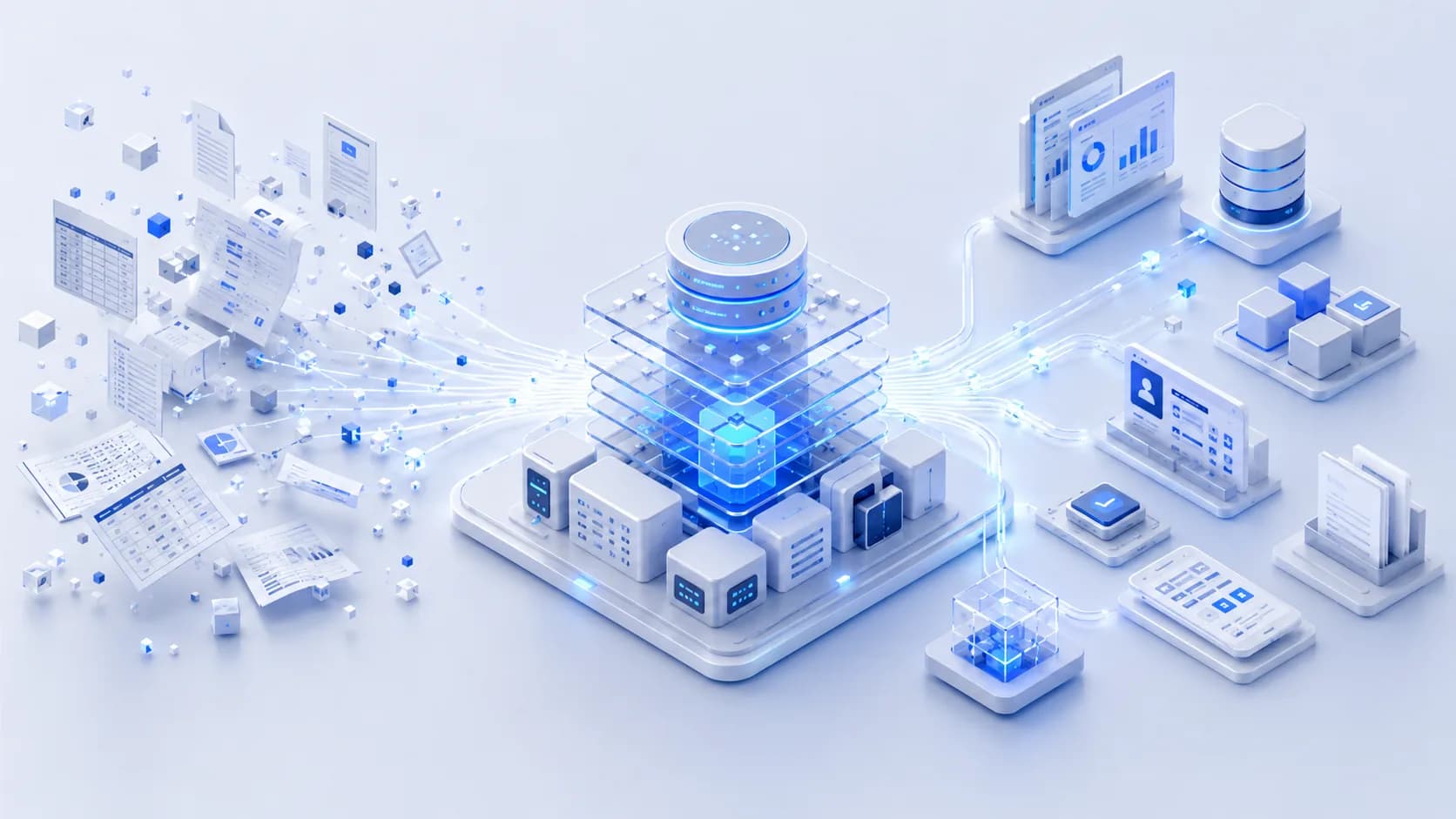 AI-generated
When nobody knows which file is current.
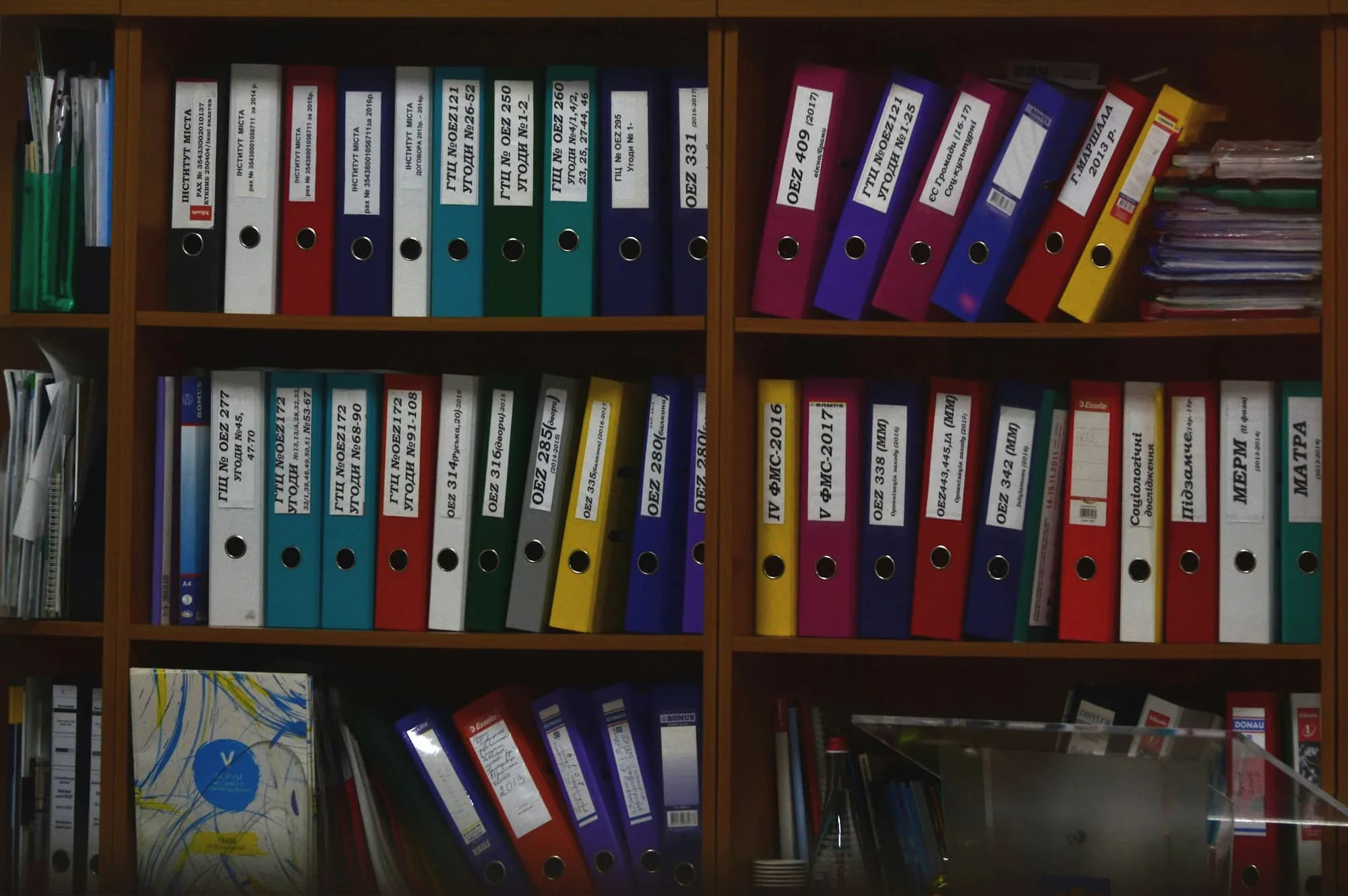
In many companies the most important database is an Excel file — or several versions of it. Information about customers, orders, products or contracts lives in spreadsheets, documents and isolated systems, is sent around by email and maintained in parallel.
For a single department this is convenient. For the company it means: there is no single source of truth — and every report starts with the question of which version is actually right.
Scattered data costs more than time.
Scattered data does not just cost time. It makes decisions harder, increases error rates and makes processes dependent on the knowledge of individual employees. Typical symptoms:
- Several Excel versions of the same list
- Information stored multiple times, contradicting itself
- Different data states across departments
- High effort for manual data maintenance
- Missing relationships between records that belong together
- Unclear access rights
- Reports only possible with heavy manual work
A data model that maps your company.
We structure relevant company data in one central data model and create clear relationships between customers, orders, documents, users, processes or whatever objects matter to your business.
On top of this custom database we build input forms, search, reporting and permissions — so every piece of information exists exactly once, stays current and is found by the right people.
Typical use cases.
Decisions based on reliable numbers.
A structured data foundation turns reporting into a query instead of a chore: stock, utilisation, open cases or KPIs are available and current — without copying, without alignment rounds, without version conflicts.
- One single source of truth
- Clear access rights and responsibilities
- Traceable change history
- Reports without manual work
- Less maintenance effort
- Independence from individual knowledge
 Unsplash
Existing systems do not have to be replaced.
A new database does not have to replace existing systems. Through APIs, imports or custom interfaces, existing applications stay in use — the database becomes the shared foundation that ERP, CRM or specialist software build on.
The transition itself is gradual: existing spreadsheets are cleaned up, migrated and only retired once the new system fully replaces them.
From data chaos to structure.
We start with an inventory: which data exists, where does it live, who maintains it, who needs it? From there we design the data model, define roles and access rights and migrate the existing records into the new system — traceably and without stopping day-to-day business.
Technology.
As a foundation we usually build on PostgreSQL — a proven, powerful open-source database without licence costs — combined with clean data modelling, automatic backups and encrypted access. Hosting follows your requirements: in the cloud or on your own infrastructure.
Related building blocks
A clean data foundation is often followed by a custom web application built on top of it — and integrations keep it connected to ERP, CRM and specialist software.
Frequently asked questions
Do we have to give up Excel entirely?
No. Excel remains a good tool for ad-hoc calculations and analysis. It just should not be the place where business-critical data is permanently maintained. Import and export functions let both worlds work together.
What happens to our existing data?
Existing records from spreadsheets and legacy systems are cleaned, structured and migrated into the new data model. Duplicates and contradictions become visible and get resolved — migration is a planned part of the project, not a side effect.
Who has access to the data?
You decide. Roles and permissions define who can view, edit or analyse which data — traceable and different per area, instead of one file that reaches anyone by email.
Do we need our own servers?
Not necessarily. The database can run in the cloud or on your own infrastructure — depending on your requirements for data protection, connectivity and operations. We set up either and keep operating it on request.
How secure is the data?
Access is encrypted, permissions are clearly defined, and automatic backups are standard. The hosting location follows your requirements — exclusively in Europe if you prefer.
Your process does not fit standard software?
Then we should not force it into one. Show us how your business works today and where the process starts to break down.